Trend #1: A Return to Solid Wood and Natural Materials (Lasting)
One of the strongest—and most welcome—trends is a renewed appreciation for solid wood furniture and natural materials. After years of glossy finishes and disposable designs, homeowners are gravitating back to pieces that feel grounded, substantial, and real.
This shift isn’t just aesthetic. It reflects a desire for:
-
Longevity over quick replacement
-
Materials that age gracefully
-
Furniture that feels stable and reassuring
Natural wood tones, visible grain, and handcrafted details are replacing ultra-sleek, synthetic looks. This is a trend with real staying power because it aligns with how people want their homes to feel, not just how they photograph.
Verdict: Timeless. Solid wood never truly goes out of style.
Trend #2: Mixed Seating Instead of Matching Sets (Lasting)
Perfectly matched dining sets are giving way to a more collected, intentional look. Mixing side chairs with armchairs—or combining different wood tones within the same family—adds warmth and personality without feeling chaotic.
This trend works because it:
-
Feels more relaxed and lived-in
-
Allows flexibility over time
-
Makes rooms feel curated rather than staged
The key to longevity is cohesion. When materials, proportions, or finishes relate to each other, mixed seating looks thoughtful—not accidental.
Verdict: Long-lasting, if done with restraint.
Trend #3: Statement Tables with Substantial Bases (Lasting)
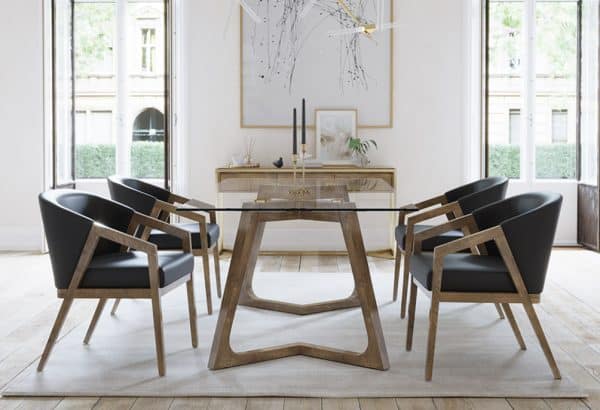
Dining tables are becoming visual anchors rather than background pieces. Thicker tops, trestle bases, pedestal designs, and architectural legs are replacing thin, lightweight frames.
This trend reflects how dining rooms are actually used:
-
As workspaces
-
As gathering places
-
As multi-purpose hubs
Heavier construction also means better stability and durability—two things that never go out of fashion.
Verdict: Built to last, both visually and structurally.
Trend #4: Warm Minimalism (Lasting)
Minimalism isn’t disappearing—it’s softening.
Instead of stark whites and sharp contrasts, the trend is moving toward warm minimalism: clean lines paired with natural textures, soft wood tones, and comfortable proportions.
Think:
This approach works long-term because it avoids extremes. It’s neither overly trendy nor overly traditional.
Verdict: A safe, enduring design direction.
Trend #5: Ultra-Trendy Colors and Finishes (Short-Lived)
Bold colors and unusual finishes—high-gloss black, extreme stains, or fashion-driven hues—are everywhere right now. While they can be striking, they’re also the most likely to feel dated quickly.
Color trends tend to change faster than furniture wears out. When the finish falls out of favor, the piece often feels “wrong” even if it’s still functional.
This is especially risky with:
Verdict: Best reserved for accessories, not investment pieces.
Trend #6: Comfort-First Dining Chairs (Lasting)
People are spending more time at the table—working, studying, lingering over meals. As a result, dining chairs are being designed with comfort as a priority.
Features gaining traction include:
This trend isn’t about luxury—it’s about usability. Comfortable chairs encourage connection, conversation, and longer gatherings.
Verdict: A functional shift that’s here to stay.
How to Choose Trends That Won’t Date Your Dining Room
Not every trend is bad. The key is choosing where to apply them.
A smart rule of thumb:
-
Timeless for large, foundational pieces (tables, chairs)
-
Trendy for easily replaceable elements (decor, lighting, textiles)
When evaluating a trend, ask:
-
Is this material durable?
-
Would this still feel right if trends shifted?
-
Can this piece be repaired or refinished?
If the answer is yes, it’s likely a safe investment.
Why Quality Always Outlasts Trends
Well-made furniture has a way of transcending trend cycles. Solid wood tables, sturdy chairs, and thoughtful craftsmanship adapt naturally to changing styles around them.
You can:
-
Update wall colors
-
Swap rugs
-
Change lighting or decor
But a quality dining table remains relevant through all of it.
Final Thoughts: Follow the Right Trends
The best dining room trends for the year ahead aren’t about chasing what’s new—they’re about choosing what lasts.
Solid materials, comfortable design, and thoughtful construction never go out of style. When trends align with durability and everyday use, they become long-term upgrades rather than short-term experiments.
If you’re refreshing your dining space this year, invest where it counts—and let the trends serve your home, not the other way around.
